LapZoo.com Under the Hood: What the Site’s Structure, Signals, and Choices Reveal
LapZoo.com presents itself as a busy, multi-category publishing site. New posts appear frequently, topics rotate fast, and the homepage is dense with links. On the surface, it looks active and alive. This article does not repeat earlier critiques about “thin content” or “SEO farming” in the usual way. Instead, it looks at how the site is built, how it behaves over time, and what those behaviors imply about intent, reliability, and risk.
A quick scorecard before the details
| Area examined | Rating (out of 5) |
| Structural clarity | ★★☆☆☆ |
| Editorial control | ★★☆☆☆ |
| Topic discipline | ★☆☆☆☆ |
| Transparency | ★★☆☆☆ |
| Reader trust | ★★☆☆☆ |
| Overall | ★★☆☆☆ |
This score is not about taste. It reflects observable patterns in layout, publishing rhythm, topic selection, and monetization signals.
1. The publishing machine, not the publication

LapZoo does not behave like a site where ideas are developed over time. It behaves like a content engine.
Posts arrive steadily across unrelated categories: business advice, finance platforms, celebrity profiles, technical how-tos, health topics, and gambling-adjacent material. There is no visible sequencing or editorial arc. One article does not respond to or build on another.
This matters because sustained publications leave trails: follow-ups, corrections, updates, or evolving themes. LapZoo leaves none of that residue. Each post stands alone, designed to perform independently rather than contribute to a body of work.
That is a structural choice, not an accident.
2. Category labels that do not limit anything

Categories on LapZoo exist, but they do not function as filters in any meaningful editorial sense.
A reader entering through “Tech” may encounter investment platforms. A finance tag may sit beside celebrity content. Gambling-related keyword blocks appear irrespective of topical relevance.
This flattening of categories serves one purpose well: maximum indexing flexibility. It serves readers poorly. When categories stop narrowing expectations, they stop being informative.
3. The monetization layer is not subtle
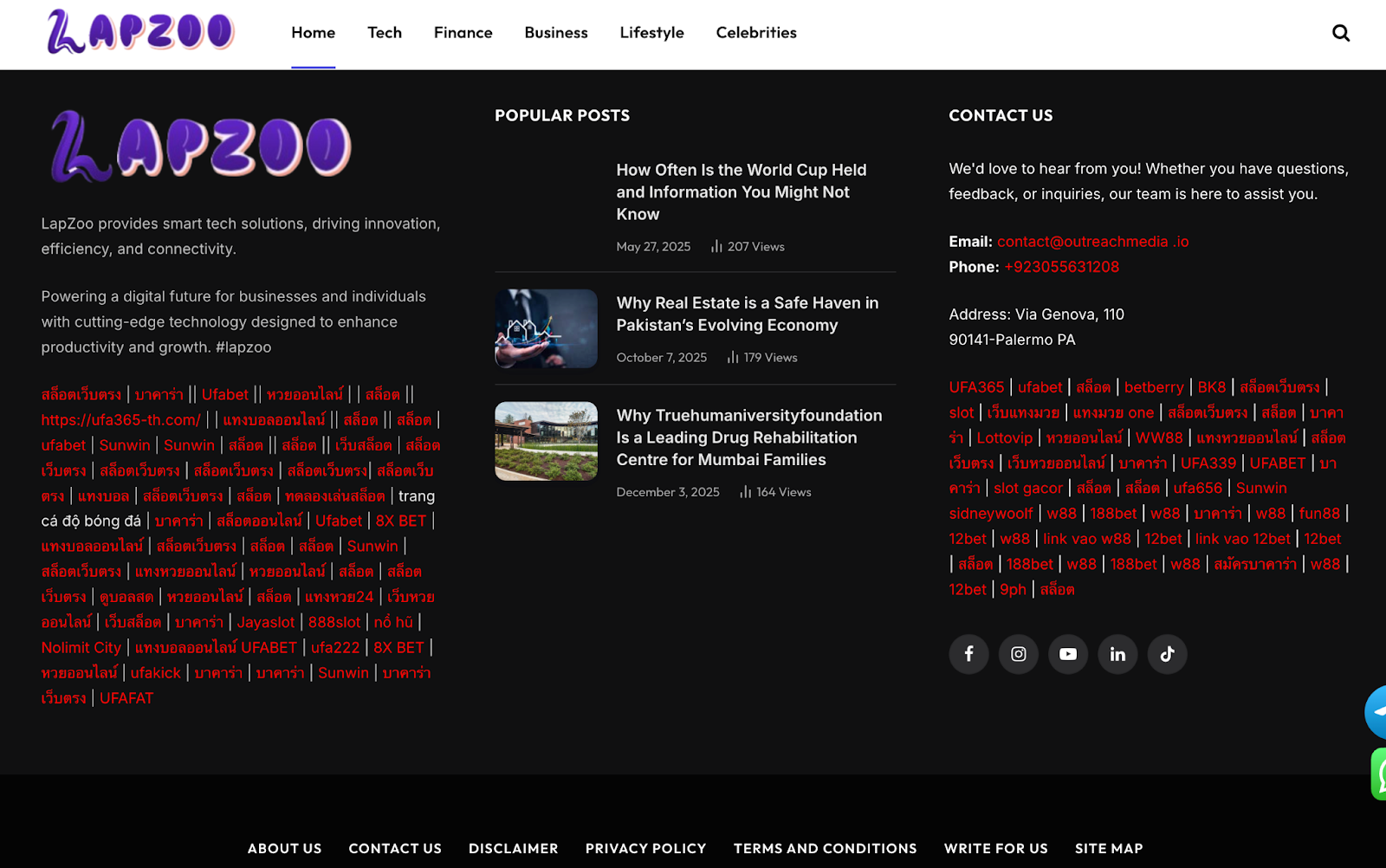
Unlike many sites that bury commercial intent, LapZoo allows it to surface openly.
Repeated gambling and betting keywords, affiliate-style phrasing, and brand-heavy blocks suggest a revenue model tied closely to search traffic and referrals, not to reader loyalty. There is nothing inherently illegal about this, but the absence of clear labeling blurs the line between information and promotion.
The most concerning element is not monetization itself, but the lack of separation. Informational tone, promotional content, and potentially risky guidance all share the same visual and structural treatment.
That uniformity trains readers to trust everything equally.
4. Content risk varies sharply by topic
Not all content on LapZoo carries the same implications. A celebrity profile and a stock-related guide do not pose the same risk if they are wrong.
The site does not appear to differentiate between low-risk and high-risk topics in its presentation.
| Content type | Risk level if inaccurate |
| Celebrity or lifestyle posts | Low |
| General tech explainers | Moderate |
| Finance and investment platforms | High |
| Medical or rehabilitation topics | Very high |
| Emissions system modification guides | Legally sensitive |
Publishing high-risk topics without visible expertise, sourcing, or disclaimers is where the site’s structure becomes a liability rather than just a stylistic weakness.
5. Authorship without accountability
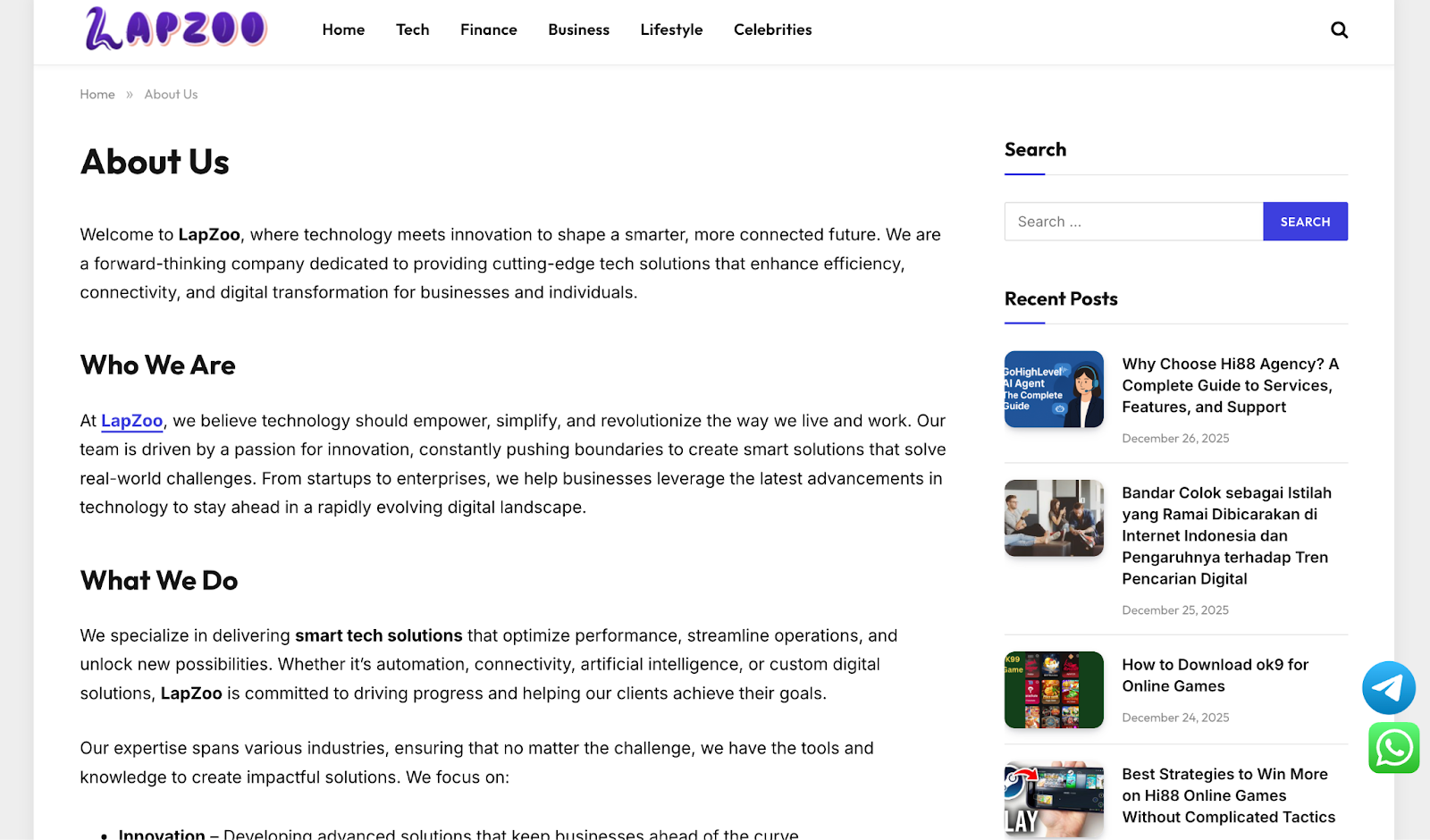
Names appear on articles, but authorship stops there.
There are no visible bios, credentials, or areas of expertise attached to contributors. Editorial labels such as generic hubs or backlink-oriented identities further dilute accountability.
In practice, this means readers have no way to judge whether an article about finance, health, or technical modification is written by someone qualified, guessing, or simply rephrasing existing material.
A site can be anonymous and still responsible. LapZoo does not provide the signals that would allow readers to make that distinction.
6. Design signals that hint at automation
The repeated blocks, duplicated titles, and dense homepage layout are not just aesthetic issues. They suggest templated or semi-automated publishing workflows.
Automation itself is not a problem. The issue is what gets automated. On LapZoo, what appears to be automated is volume, not review. There is no visual indication of prioritization, curation, or pruning.
Everything stays. Nothing matures.
Final assessment
LapZoo.com is not chaotic or unfinished. It is efficient. It does exactly what its structure suggests it was built to do: generate searchable pages across a wide net of topics with minimal friction.
What it does not do is protect readers from the consequences of treating all information equally. By presenting low-risk entertainment, high-risk guidance, and commercial material in the same neutral wrapper, the site places the burden of discernment entirely on the reader.
For casual browsing, this may go unnoticed. For decisions involving money, health, legality, or safety, it becomes a serious limitation.
The site is not hiding its intent. It is simply not designed to be careful.
Post Comment
Be the first to post comment!