
Too Scared to Argue? A 56-Year-Old in Guangzhou Will Do It for $26
If confrontation makes your stomach turn, a man in southern China has a proposition. Pay him ¥188, roughly $26 by the vi...
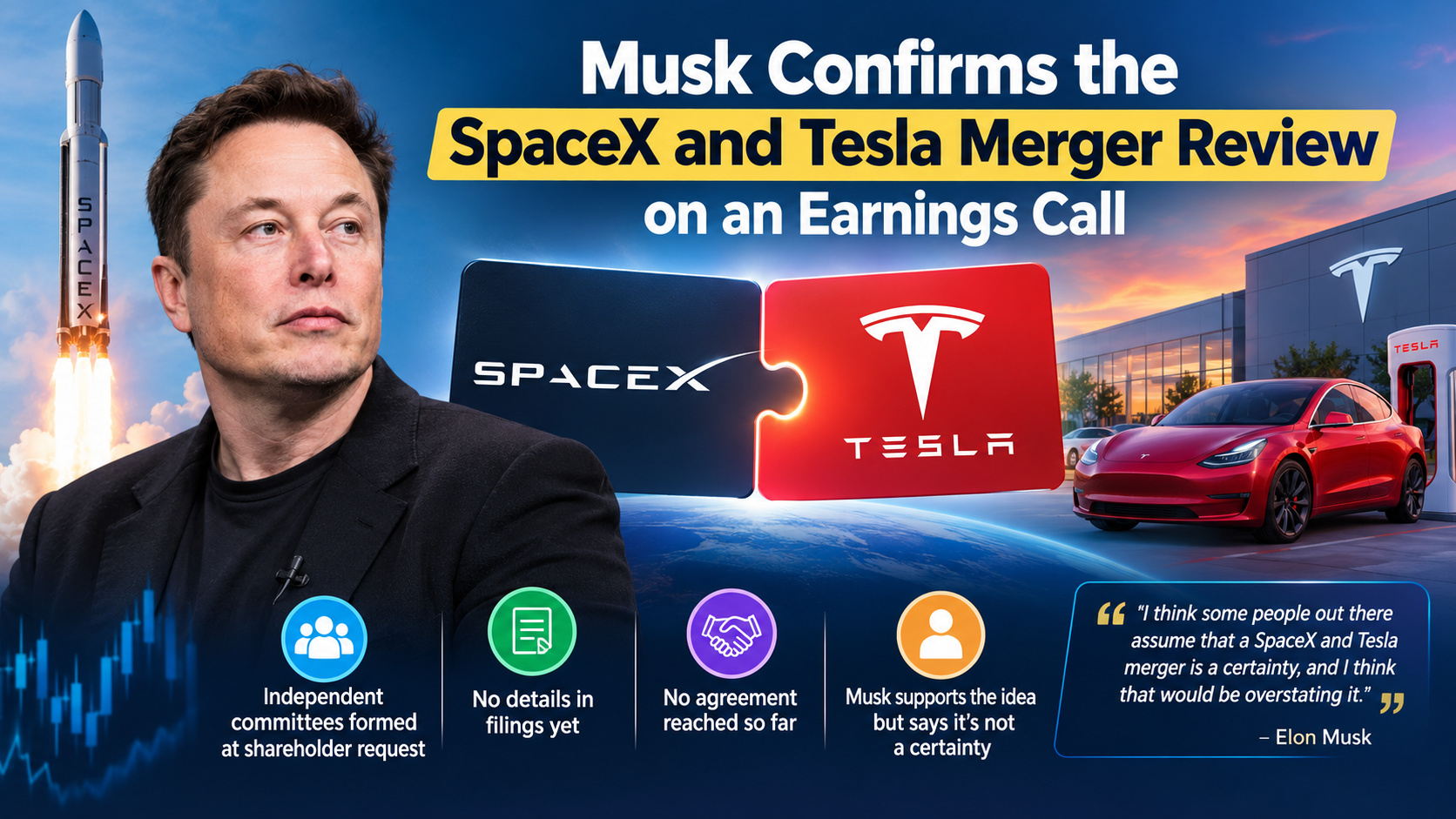
The boards of SpaceX and Tesla have each formed special committees to review a possible merger, Elon Musk said on Tuesday, October 20, 2026, giving the first formal confirmation that the two largest companies he runs are examining a combination. Bloomberg described the move as a preliminary step toward what would rank as the largest corporate tie-up of all time. No terms have been agreed, and Musk himself cautioned that a SpaceX and Tesla merger should not be treated as a certainty.
Musk disclosed the committees in response to a question from Deutsche Bank analyst Edison Yu during SpaceX's third-quarter earnings webcast. The committees consist of independent directors and were created at the request of shareholders, according to Musk, who is CEO and the largest individual shareholder of both companies.
Neither SpaceX's earnings filing nor any Tesla filing mentions the committees, so Musk's remarks on the webcast are currently the only source. Neither company has named the committee members or released a merger proposal.
Musk voiced personal support for the idea while trying to manage expectations. "I think some people out there assume that a SpaceX and Tesla merger is a certainty, and I think that would be overstating it," he said. He also stressed that the committees had not reached an agreement and might not do so.
The comments mark a shift in tone from earlier this year, when Musk dismissed a report of a SpaceX merger tied to the sale of Tesla's China operations as "fake news". When asked about a potential deal after SpaceX's July IPO, Musk had declined to offer an opinion, saying companies cannot discuss combinations on an earnings call.
Musk said that, because he is a conflicted party under securities regulations, he is not a member of either special committee or involved in the talks. He described the arrangement as an odd kabuki dance in which two groups of people are talking while he cannot be in the conversation.
The structure matters because Musk sits on both sides of any transaction. Tesla has seven independent board members under Nasdaq's listing standards, including board chair Robyn Denholm, Ira Ehrenpreis, former Tesla CTO JB Straubel, Joe Gebbia, Jack Hartung, James Murdoch, and Kathleen Wilson-Thompson, according to the company's October 19 proxy filing. Neither Musk nor his brother Kimbal Musk is independent.
SpaceX lists six independent directors, including Ehrenpreis, who also chairs the company's compensation and nominating committee. Antonio Gracias, Musk, and SpaceX president and chief operating officer Gwynne Shotwell are also on the board but are not considered independent. The overlap of Ehrenpreis on both boards and Gracias's history with Tesla illustrates why independent review is central to the process.
"It's really up to the special committees of both companies. Like they've got to come up with something, and then that's got to be put to the shareholders as a vote," Musk said.
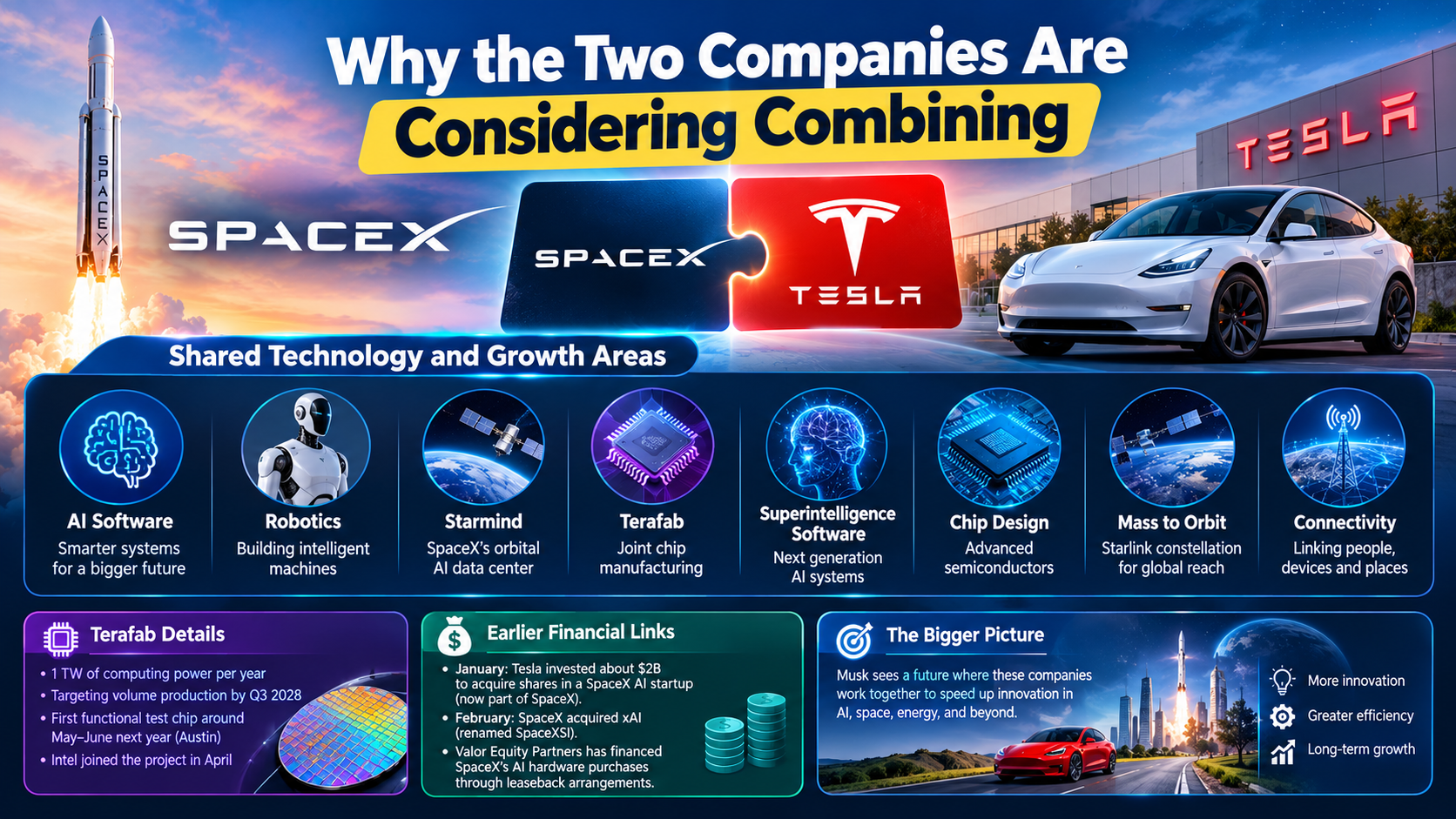
Musk framed the rationale around technology the companies already share. He said there was a lot to be gained from cooperating on AI software, robotics, SpaceX's orbital AI data center project Starmind, and Terafab, the joint chip manufacturing project between Tesla and SpaceX. He also listed superintelligence software, chip design, mass-to-orbit with the Starlink constellation, and connectivity among the areas of overlap.
Terafab is the most concrete of these ties. The chip manufacturing joint venture aims to reach volume production by the third quarter of 2028, Musk said on the same call, while acknowledging large uncertainty about the date. The project aims to produce 1 terawatt a year of computing power for AI and robotics, and Terafab internally targets a first functional test chip around May or June of next year at its research facility in Austin. Intel said in April it would join the project.
The financial links predate the committees. In January, Tesla announced it was investing about $2 billion to acquire shares in an AI startup that is a subsidiary of SpaceX, and in February, SpaceX acquired xAI, which Musk has since renamed SpaceXSI. Gracias's firm, Valor Equity Partners, has also financed SpaceX's AI hardware purchases through leaseback arrangements.
At Tuesday's regular-session close, MarketScreener data put SpaceX's market capitalization at roughly $2,006 billion and Tesla's at roughly $1,477 billion. Added together, those figures imply an indicative combined market value of about $3.48 trillion. SpaceX has a market cap of more than $2 trillion while Tesla's is nearly $1.5 trillion, according to Axios, and Josh Gilbert, lead APAC analyst at eToro, told Reuters a tie-up would bring together two companies worth around $3.5 trillion combined and would be the largest merger the market has ever seen.
Those figures moved overnight. SpaceX closed Tuesday at $147.79 and jumped to about $159.70 in extended trading, while Tesla closed at $373.71 and rose to about $380.45 after hours. If those after-hours prices hold through Wednesday's session, SpaceX's market value would be roughly $2.17 trillion and Tesla's roughly $1.50 trillion, for an indicative combined figure near $3.67 trillion. These are calculations based on reported share prices, not official company figures.
That number is simply the sum of current market values. It is not a negotiated price, and no exchange ratio, premium, or structure has been disclosed. No structure, valuation, or timeline for a deal has been disclosed, according to Reuters.
Reuters, citing a person familiar with the matter, reported that the talks began in recent weeks, could result in SpaceX acquiring Tesla, and that Tesla has been working with an investment bank. Analyst estimates vary widely. Dan Ives of Yorkville Ives & Co said the price for Tesla shares would likely have to be in the $550 range to get done and approved. ARK Invest analyst Brett Winton argued Tesla shareholders with a horizon beyond 2030 should favor a merger even without a premium. Both are outside views, not company figures.
On the Tesla side, Musk said the company would need a 50% vote of all shares, not just those who vote, and called that quite a high hurdle. The distinction is significant because many retail shareholders do not cast ballots, so shares that go unvoted count effectively as votes against.
The SpaceX IPO cemented Musk's grip on that company, where he holds more than 50% voting power, which would make it easier to gain support for a merger from SpaceX shareholders. With no terms agreed, any Tesla vote would likely require its own special meeting.
Historically, Tesla shareholders have broadly fallen in line with Musk's wishes, and Deepwater's Gene Munster wrote on X that shareholders would support the deal. Governance scrutiny is still expected. Gilbert noted that even with Musk stepping back from the committees, a deal where one man runs both sides will draw tough questions on governance.
SpaceX's segments include Space, Connectivity, and AI; its Starlink network operates roughly 10,200 satellites delivering connectivity across 167 countries and territories. Tesla's sales break down as automotive vehicles at about 69%, energy generation and storage at about 14%, and services at about 13%.
Justus Parmar of Fortuna Investments argued Tesla's high-margin, cash-generative automotive business could help support SpaceX's bottom line and fund capital-intensive goals including orbital data centers. A SpaceX and Tesla tie-up could also align the EV maker's energy storage business with the idea of data centers in space.
National security has emerged as a potential complication. Michael Monaghan of Founder ETFs said that given SpaceX's role as a critical US defense contractor, Tesla's China operations may need to be formally separated or placed behind strict operational and information firewalls.
Musk's comments came after Tuesday's regular session had closed. SpaceX traded between $143.27 and $148.66 during the regular session and closed down 0.11% at $147.79. Tesla rose 1.54% to $373.71, trading intraday between $363.64 and $377.59. Both moves were recorded before the call began.
In after-hours trading, SpaceX shares rallied sharply. SpaceX rose 8.06% in after-hours trading to $159.70 after reporting Q3 revenue of $14.58 billion, a 161% year-over-year increase, with EPS of 35 cents. CNBC and Reuters both reported an after-hours gain of about 8%. The jump reflected the earnings beat as well as the merger comments; SpaceX posted its first profit as a listed company, according to Reuters.
Tesla's after-hours move was more muted. Tesla gained a further 1.8% after hours to $380.45. CNN put the late-trading rise at a little over 1%.
The momentum carried into Wednesday's pre-market. Nasdaq futures rose 1% in early Wednesday trading, boosted by SpaceX's earnings and the merger news, with Gate market data showing Tesla at $379.63, up 3.00%, and SpaceX at $157.50, up 5.73%. Asian space technology stocks also rose on Wednesday, tracking the SpaceX after-market surge. Wednesday's US regular session had not closed at the time of writing. Tesla reports its own third-quarter results after the bell on Wednesday, October 21, where the committee is expected to be a central topic.
| Session (source) | SpaceX (SPCX) | Tesla (TSLA) |
|---|---|---|
| Tuesday Oct 20 regular close (MarketScreener) | $147.79, down 0.11% | $373.71, up 1.54% |
| Tuesday Oct 20 after hours (KuCoin exchange data) | $159.70, up 8.06% | $380.45, up 1.8% |
| Wednesday Oct 21 pre-market (Gate via ChainCatcher) | $157.50, up 5.73% | $379.63, up 3.00% |
| Market cap at Tuesday close (MarketScreener) | about $2,006 billion | about $1,477 billion |
The committees are at an early stage. They have not reached agreement on the terms of any transaction, Musk said, and the companies have not disclosed who sits on them, which advisers they have hired, or when they expect to conclude.
Several steps would have to follow before any merger could move forward. Each committee would need to recommend a transaction to its full board. The companies would then need to file formal disclosures with the Securities and Exchange Commission describing the terms, and Tesla would need to secure a majority of all outstanding shares at a shareholder vote. SpaceX shareholders would also vote, though Musk's majority voting control makes that outcome less uncertain. Regulatory review, including possible questions about Tesla's China business and SpaceX's defense work, would run in parallel.
As of October 21, 2026, the open questions include whether a deal is structured as SpaceX acquiring Tesla, what exchange ratio or price Tesla shareholders would receive, whether Tesla's China operations would be carved out, and whether the independent committees conclude that a combination is in the interest of each company's shareholders at all.
If confrontation makes your stomach turn, a man in southern China has a proposition. Pay him ¥188, roughly $26 by the vi...

A 49-year-old bricklayer sold almost everything he owned and spent more than 36 hours on a bus, convinced he was travell...
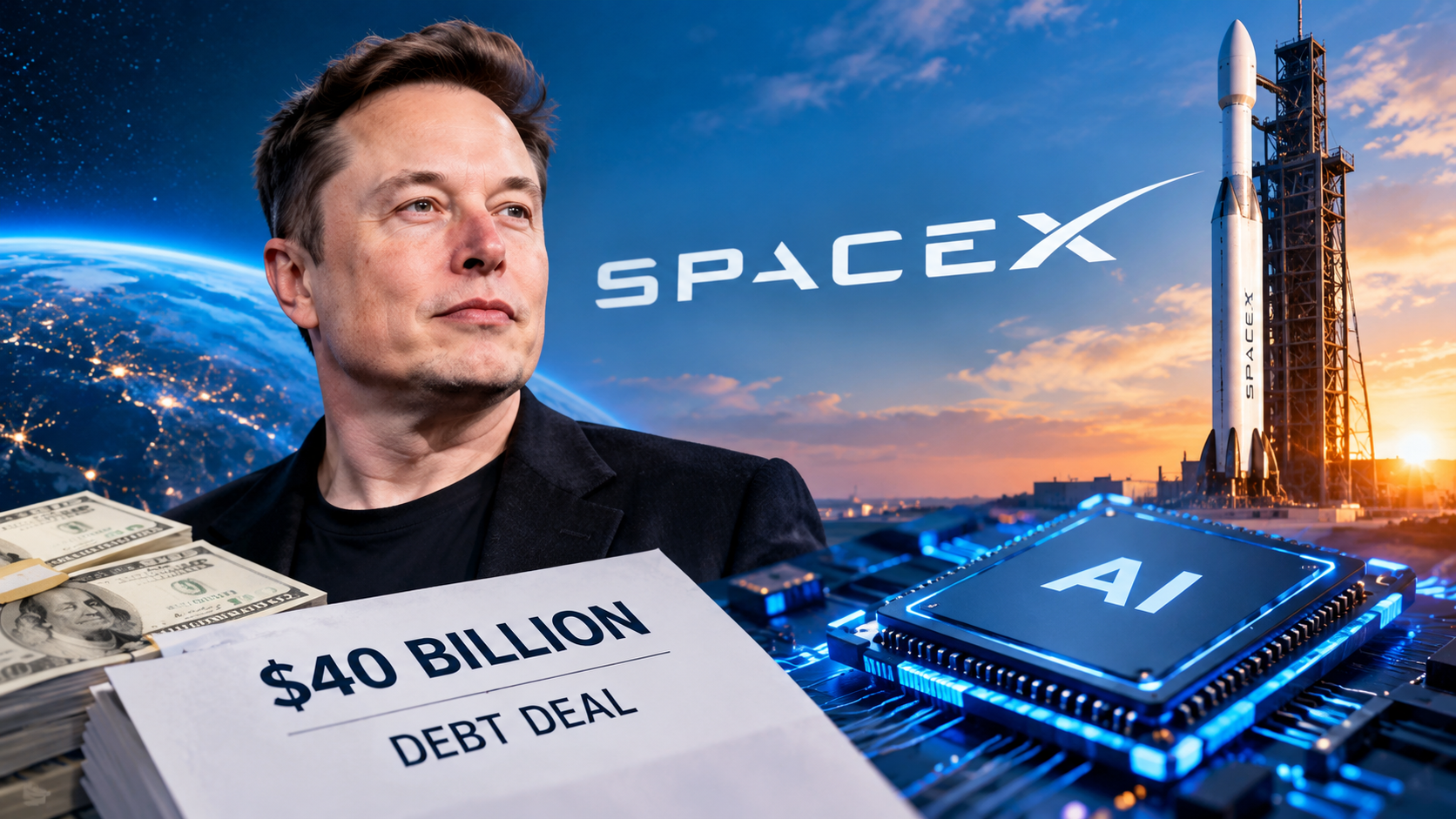
Elon Musk said on Sunday, October 25, 2026, that SpaceX had closed $40 billion in debt financing to buy graphics process...
Tom Brady and Candice Swanepoel are reportedly dating, according to a wave of entertainment reporting that began on Satu...